Losing a tooth because of an accident, sports injury, or unexpected trauma can be upsetting, but replacing it can help restore your smile and everyday oral function. Dental implants are one option for replacing a missing tooth because they are designed to replace both the visible tooth and the root. For patients in Lakeland, the right replacement approach depends on factors such as the condition of the jawbone, surrounding teeth, overall oral health, and the location of the missing tooth.
What Happens After a Tooth Is Lost to an Injury?
A traumatic injury can cause a tooth to become loose, fractured, or completely knocked out. If the tooth cannot be saved, leaving the space untreated may eventually affect the surrounding teeth and jawbone. When a tooth is missing, nearby teeth can gradually shift toward the open space. Changes in the bite may also occur, making chewing less comfortable. The jawbone beneath the missing tooth can lose stimulation over time, which may lead to bone loss in that area.
That is why it is helpful to have a dental evaluation soon after an injury. Even if the pain has decreased, the surrounding bone, gums, and neighboring teeth may still need attention.
How Dental Implants Replace a Missing Tooth
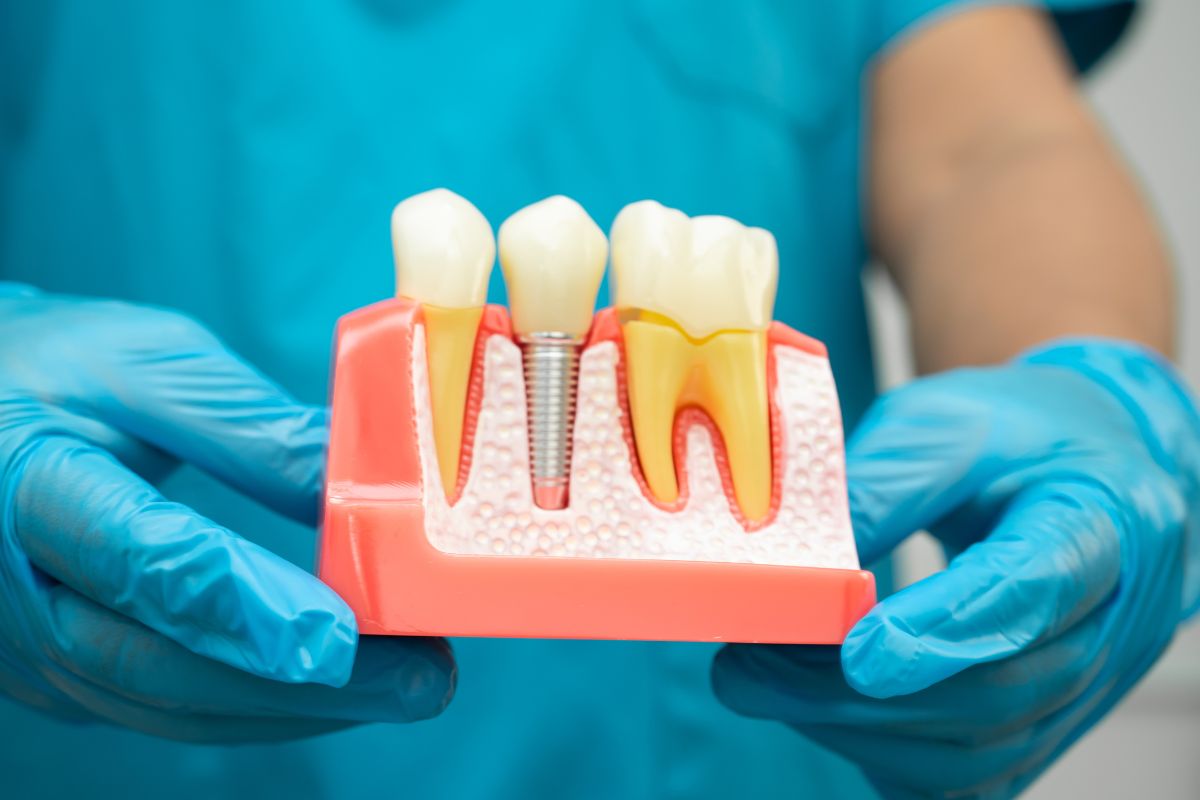
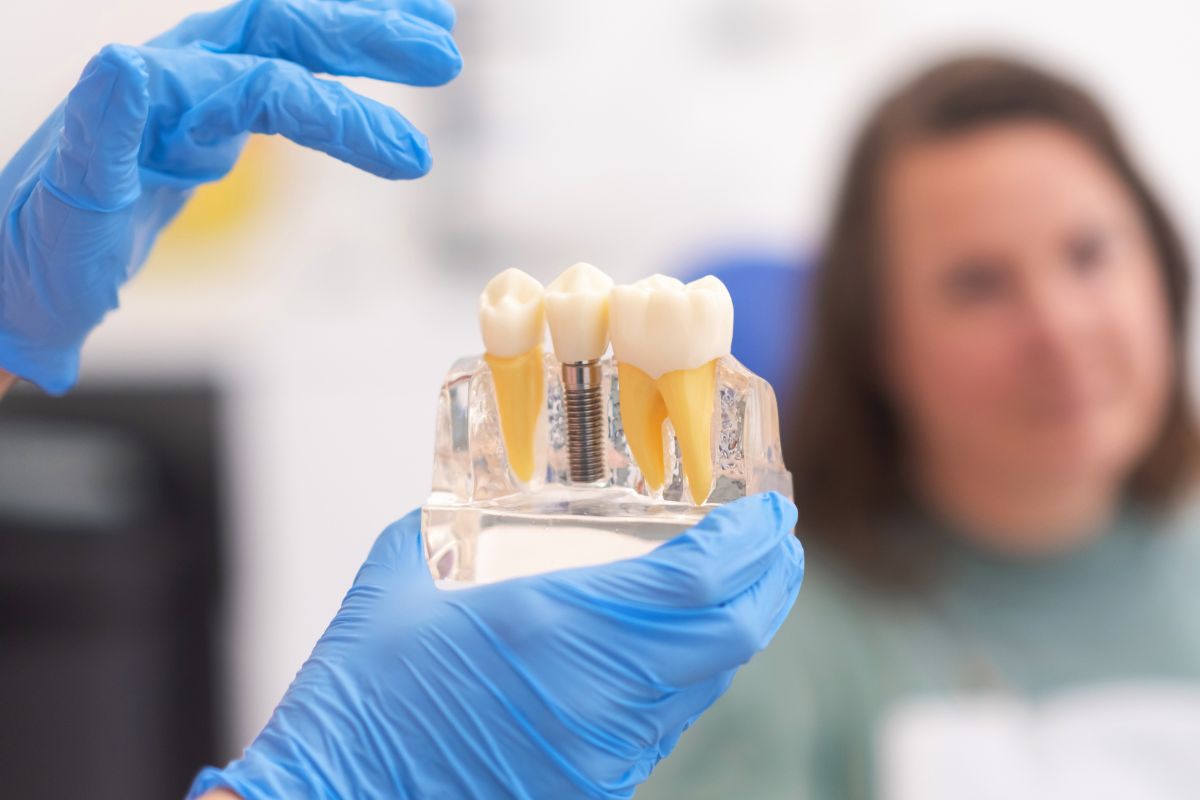
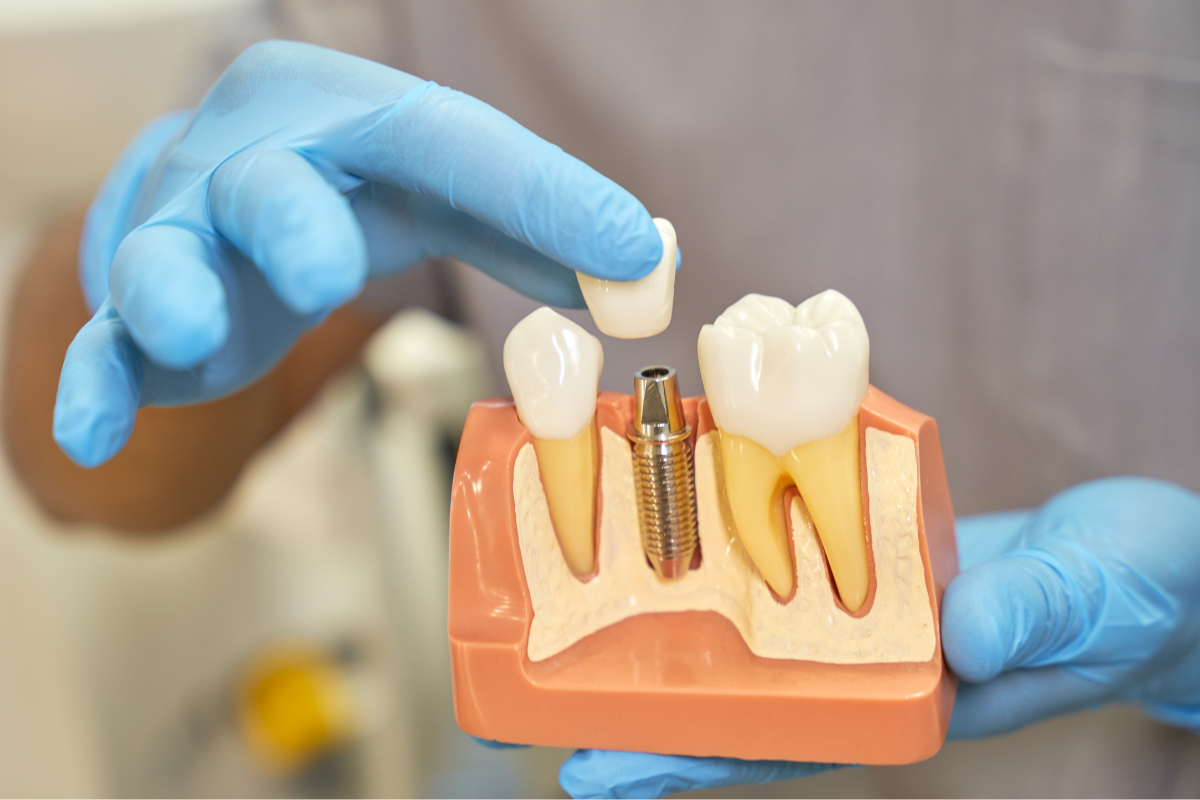
A dental implant is a small post placed into the jawbone to serve as an artificial tooth root. Once the implant has integrated with the bone, a custom restoration can be attached to complete the replacement. For a single missing tooth, the restoration is typically a dental crown designed to resemble a natural tooth. Unlike a traditional dental bridge, an implant-supported crown does not require the adjacent teeth to be used as supports.
The process generally involves:
- Evaluation: Your dentist examines the injury site, surrounding teeth, gums, and jawbone. Imaging may be used to assess bone levels and plan treatment.
- Implant placement: The implant post is positioned in the jawbone when you are ready for treatment.
- Healing: The bone gradually integrates with the implant. Healing time varies from patient to patient.
- Restoration: After healing, a custom crown is attached to complete the replacement.
In some cases, additional treatment may be needed before implant placement, particularly when an injury has caused significant bone loss.
Are Implants Always Possible After an Injury?
Not necessarily. The condition of your jawbone is an important consideration. Severe trauma may damage bone or soft tissue around the missing tooth, which can affect implant planning. Your dentist may also evaluate gum health, infection, bite alignment, and the condition of nearby teeth. If there is not enough bone to support an implant securely, bone grafting or another preparatory procedure may be considered.
This individualized evaluation is important because the best implant treatment in Lakeland should be based on your specific dental needs rather than a standard treatment plan.
Benefits of Implant-Supported Tooth Replacement
For an appropriate candidate, implant treatment can offer several advantages:
- Helps restore chewing function
- Provides a stable foundation for a replacement tooth
- Can help maintain stimulation of the jawbone
- Does not require reducing healthy neighboring teeth for support
- Can be designed to closely resemble natural teeth
- Provides a long-term tooth replacement option when properly maintained
Good oral hygiene and regular dental visits remain important after treatment. An implant does not develop a cavity, but the surrounding gums and tissues still need proper care.
What Should You Do After Losing a Tooth?
If an injury has knocked out a permanent tooth, seek professional dental care as soon as possible. In some situations, a knocked-out tooth may be saved if treated promptly, so immediate evaluation matters. If the tooth cannot be preserved, your dentist can discuss replacement options once the injury has been evaluated and the tissues have healed appropriately. Depending on your situation, options may include an implant-supported crown, bridge, partial denture, or another restoration.
For patients considering dental implants in the Lakeland area, Memphis Dentures & Implants provides implant-focused care, including single-tooth replacement and implant-supported restorations..
Conclusion
Losing a tooth to an injury does not mean you have to live with a permanent gap in your smile. The right replacement option depends on the condition of your mouth, jawbone, surrounding teeth, and overall dental health. Dental implants can provide a stable foundation for replacing a missing tooth, but an examination is necessary to determine whether they are appropriate for your situation. If you recently lost a tooth because of an accident or injury, scheduling an evaluation can help you understand your treatment options and determine the next step toward restoring your smile.
If you have lost a tooth due to an injury and want to explore your replacement options, schedule an appointment with Memphis Dentures & Implants in Lakeland for a personalized evaluation.
FAQs
1. Can a tooth lost from an injury be replaced with a dental implant?
Yes. A dental implant can often replace a permanent tooth lost because of an injury. Your dentist will first evaluate the jawbone, gums, surrounding teeth, and overall oral health to determine whether an implant is appropriate.
2. How soon can I get a dental implant after losing a tooth?
The timing depends on the condition of the tooth socket, gums, and jawbone. Some patients may be candidates for early implant placement, while others may need time to heal or require bone grafting before treatment.
3. What happens if there is not enough bone for a dental implant?
If there is insufficient jawbone to support an implant, your dentist may recommend bone grafting or another procedure to improve the available bone. Treatment depends on the location and extent of bone loss.
4. Are dental implants better than a bridge after losing a tooth?
Both can replace a missing tooth, but they work differently. An implant replaces the tooth root and supports a crown independently, while a traditional bridge generally uses neighboring teeth for support. Your dentist can explain which option fits your oral health and needs.
5. How long does a dental implant take to replace a missing tooth?
The complete process can take several months because the implant needs time to integrate with the jawbone before the final restoration is placed. The timeline varies depending on healing and whether additional procedures are needed.